
23 Min Read
- Common Resting Bitch Face Types
- Causes of Different Resting Faces
- Non-Surgical Improvements
- Surgical Options for Bitchy Resting Face Improvement
- Case Presentation of a Deep Plane Facelift
- Expert Consultation and Realistic Expectations
- Dr. Delgado's Deep Plane Facelift Reviews
- What are Dr. Delgado's Locations besides the San Francisco Bay Area?
- Frequently Asked Questions
- References
- About the Author
Do people often misinterpret your mood because of your resting face? If you’ve been told you have “resting bitch face” (RBF), or Do people often misinterpret your mood because of your resting face? If you’ve been told you have “resting bitch face” (RBF), or are curious about what it means, this comprehensive guide will help. Explore common resting faces, such as Resting Bitch Face (RBF), Tired Resting Face, and Angry Resting Face, and uncover strategies for improving them. We’ll explore what RBF is, why it happens, and how to address it, as well as other common resting-face types and strategies to improve the resting face.
- Both genetics and aging significantly influence resting facial expressions, with habitual expressions further shaping how faces appear at rest.
- Non-surgical options like BOTOX® Cosmetic, dermal fillers, facial contouring, and facial exercises, along with surgical procedures, offer various pathways to improve resting facial expressions and self-esteem.
Common Resting Bitch Face Types

Various common resting face types include resting bitch face and tired resting face.
Resting face types are as distinctive as the individuals who have them. Shaped by a blend of genetics, environmental factors, and habitual facial movements, these expressions often convey a narrative that may not reflect reality. Some of the most prevalent resting face types include resting bitch face (RBF), tired resting face, and angry resting face. Each type possesses unique characteristics and societal perceptions that can shape how others perceive us.
Understanding these common types can help us navigate social interactions more effectively. For instance, while RBF might lead others to perceive someone as cold or unapproachable, a tired resting face could be mistaken for a sign of poor health or emotional distress. Similarly, an angry resting face might provoke negative reactions, even when no hostility is intended. Facial contouring can be a useful technique for improving the appearance of these resting-face types.
Facial symmetry is another factor that can influence how our resting face is perceived, with more symmetrical faces often seen as more attractive and approachable.
Taking a closer look at these three types can provide valuable insights into their characteristics and impressions.
Resting Bitch Face (RBF)
Resting bitch face, or RBF, has become a cultural phenomenon, often referenced in social media memes and popular culture. RBF is not a medical condition but a natural resting state of the face. A furrowed brow, downturned mouth corners, and eyes that lack expression often give off a less-than-pleased demeanor. This facial expression often leads people to be perceived as cold or angry, even when they are actually feeling completely neutral.
Facial symmetry can influence how RBF is perceived, with more symmetrical faces often perceived as more attractive and less harsh.
The term RBF first gained media attention in 2013 and continues to influence contemporary culture, with public figures like Kristen Stewart often cited as examples. Despite its name, having an RBF does not mean someone is actually experiencing negative emotions. It is more about how their facial muscles naturally position themselves at rest, often due to a combination of genetics and habitual expressions linked to stress or anxiety.
Although RBF can pose social challenges, it does not accurately reflect a person’s feelings or personality. Recognizing this can reduce negative perceptions and reactions associated with this expression.
Social and Emotional Implications of RBF
People incorrectly assume that individuals with RBF are in a bad mood, unapproachable, or judging others, and that a neutral expression may be read as annoyed based on what others infer from a face at rest. Individuals with RBF may be perceived as untrustworthy or unfriendly due to facial cues that can look irritated, which can lead to social misunderstandings and emotional distress. RBF can create a barrier to first impressions by unintentionally creating distance, causing others to hesitate before starting a conversation.
RBF disproportionately affects women due to cultural expectations that they appear warm and accommodating. Cultural and gender biases can influence the perception of RBF, leading to negative stereotypes, fear about how one’s own face will be read, and pressure for individuals to conform to societal expectations of facial expressions. Cultural perceptions also vary, and some research suggests that neutral expressions in Eastern Europe are more likely to be interpreted as stoic. Many have heard some version of the comment that they look upset even when they feel fine. That reaction is often just a guess, not an accurate read of how they actually feel.
Tired Resting Face

Patient with tired resting face.
Tired resting face is another common type, characterized by droopy eyelids and dark circles under the eyes, giving an overall fatigued appearance. As individuals age, the characteristics of a tired resting face become more pronounced due to reduced facial fat and muscle tone, leading to sagging skin, altered facial contours, and other changes. This type of resting face can be particularly challenging because it is often mistaken for signs of poor health or emotional distress, which can affect social interactions.
Facial contouring can help address signs of aging associated with a tired-looking face at rest, resulting in a more youthful, refreshed appearance.
The aging process plays a significant role in the development of a tired, resting face. As the skin loses elasticity, features like sagging skin and deeper lines become more apparent, and rapid weight loss can make this look more noticeable by reducing facial volume. In some cases, people describe this as the Ozempic Face when fat is lost from the cheeks and temples. The aging process also affects how the face holds weight, and when fullness is lost too quickly, wrinkles may stand out more. Recognizing how aging affects our facial expressions can help us find appropriate ways to address and improve these signs.
Angry Resting Face

Patient after a deep plane facelift, eyebrow lift, and eyelid lift with fat injections.
Tense facial muscles characterize an angry resting face and a furrowed brow, conveying hostility or annoyance. This facial expression can make someone look annoyed or irritated, leading to premature judgments, with others often perceiving the individual as unapproachable or unfriendly. Facial symmetry can also influence how an angry resting face is perceived, with more symmetrical faces often seen as less harsh. Despite these misconceptions, an angry resting face does not necessarily reflect the person’s actual emotions.
To improve an angry resting face, one can engage in facial exercises, practice relaxation techniques, and become more aware of habitual expressions. Addressing muscle tension and habitual expressions can lead to a more relaxed and friendly appearance.
Causes of Different Resting Faces
Learning about the causes of different resting faces offers valuable insights into how to manage and improve them. The main factors include genetics, aging, and habitual expressions, each of which plays a crucial role in shaping our resting facial expressions and how others perceive them.
Genetics and Facial Structure
Genetics significantly influence our facial structure and natural expressions. Aging, on the other hand, causes changes in facial muscles and skin elasticity, leading to variations in how our faces appear at rest. Habitual expressions, formed by repeated facial movements, can become ingrained in our resting faces over time.
Facial symmetry is another factor that can influence how our resting face is perceived, with more symmetrical faces often seen as more attractive and approachable.
Exploring each of these causes in detail can help us understand how they contribute to different resting face types.
Genetic predispositions play a significant role in determining an individual’s resting facial expression. The facial features and expressions we inherit from our parents can shape the structure and appearance of our faces, including those seen in RBF. For example, a particular eyebrow position or mouth shape can be passed down through generations, influencing how our faces look when at rest.
Facial symmetry, which is often inherited, can also play a significant role in how our resting face is perceived.
Recognizing the genetic aspects of facial expressions can help explain why certain resting-face types are more common in some families. This knowledge can also help find suitable ways to manage and improve our resting facial appearance.
Aging Effects
As we age, our skin loses elasticity, and our facial muscles change, leading to noticeable alterations in our resting facial expressions. Features such as droopy eyelids and dark circles become more prominent, contributing to a tired or aged appearance. These changes can affect how others perceive us, often leading to misconceptions about our emotional state or health.
Facial contouring can help address signs of aging, providing a more youthful, refreshed appearance.
Understanding how aging impacts our facial expressions is crucial for finding effective ways to address these changes. Whether through skincare routines, facial exercises, or more advanced treatments, there are various options to help maintain a youthful, vibrant appearance.
Habitual Animation and Less-than-Pleased Expression
Over time, the emotions we frequently display can become permanent aspects of our resting facial expression. Consistently frowning or displaying other negative expressions can unintentionally create an impression of irritation or displeasure, making someone look annoyed even when relaxed. This phenomenon is due to muscle memory and repeated use of specific facial muscles, making it important to be mindful of this entire smiling process.
Awareness of habitual expressions and relaxation techniques can reduce tension in facial muscles and improve the appearance of our resting faces. Regularly engaging in facial exercises can help achieve a more pleasant and inviting appearance.
Non-Surgical Improvements

For those looking to improve their bitchy resting-face expressions without surgery, there are several effective non-surgical options. Treatments such as BOTOX® cosmetic injections, dermal fillers, and facial exercises can significantly enhance appearance and boost self-esteem.
These non-surgical methods are preferred for their lower risk, minimal downtime, and immediate results. These treatments can address specific concerns related to resting bitch face and other facial expressions, helping individuals achieve a more neutral and approachable look.
Examining these non-surgical options in detail can reveal how they help improve a less-than-pleased expression.
BOTOX® Cosmetic Injections
BOTOX® Cosmetic or Dysport® injections are a popular non-surgical option for addressing RBF caused by etched lines and muscle-related issues. BOTOX® Cosmetic can contribute to a more pleasant facial expression by relaxing and smoothing frown lines. The glabella, the area between the eyebrows, is commonly treated to improve resting bitch face. A qualified injector should determine the results and the proper dose.
Facial contouring can work alongside BOTOX® Cosmetic injections to provide a more holistic approach to enhancing the expressions associated with the resting bitch face.
A qualified plastic surgery clinic administers these injections and can provide quick and noticeable improvements. BOTOX® Cosmetic treatments are particularly effective for reducing the appearance of a permanent frown, making the face appear more relaxed and friendly.
Dermal Fillers
Dermal fillers are another effective non-surgical option for improving resting facial expressions. These fillers add volume to areas like the cheeks, lips, and under-eye regions, enhancing facial contours and creating a more youthful appearance. Dermal fillers can be effectively enhanced by incorporating facial contouring, providing a more holistic approach to refining the resting facial expression. Fillers are popular for their immediate results in addressing specific facial concerns.
Common areas for filler application include the cheeks, which can help lift and define the face, and the lips, which can create a fuller and more balanced look. Plastic surgeons apply fillers, which can greatly enhance a person’s appearance.
Facial Exercises
Facial exercises are a non-invasive way to tone facial muscles, enhance flexibility, and contribute to a more relaxed demeanor. Regular practice of these exercises can improve blood circulation, increase skin vitality, and reduce signs of aging. Facial exercises can also help improve facial symmetry, making the face appear more balanced and attractive. Common exercises include pouting, smiling widely, and raising eyebrows, which target specific facial muscles.
Adding facial exercises to your daily routine can noticeably improve your resting expression, making you appear friendlier and more approachable. These exercises are simple to perform and can be done at home, making them accessible to everyone.
Surgical Options for Bitchy Resting Face Improvement

Patient with dotted lines on the face in an examination room.
Plastic surgery options are available for those seeking more permanent solutions to improve the appearance of their resting face. Some plastic surgeons are using cosmetic procedures to help patients with RBF. Cosmetic procedures, such as facelifts, brow lifts, blepharoplasty, chin augmentation, lower face and neck lifts, lip lifts, and facial fat injections, can significantly enhance facial appearance. Facial contouring is another surgical option that can significantly enhance facial appearance and improve resting facial expressions. Consulting with qualified plastic surgeons is crucial to determine the most appropriate procedure for your needs.
Brow Lift
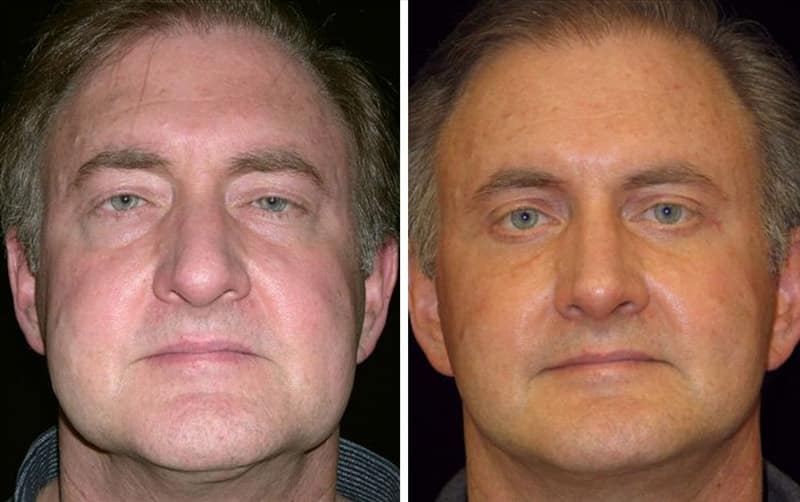
Patient after a deep-plane facelift, neck lift, buccal fat pad reduction, and eyelid lift (blepharoplasty).
A brow lift is a surgical procedure that elevates and tightens the brow and forehead, resulting in a smoother, more youthful appearance. There are two main types of brow lifts: coronal and endoscopic. An endoscopic brow lift involves short scalp incisions and is less invasive, whereas a coronal brow lift requires an incision behind the hairline and often addresses the glabella region.
A brow lift can also improve facial symmetry, making the face appear more balanced and attractive.
The procedure can address a permanent frown and create a more open and alert expression, making the face appear less stern and more approachable. Consulting with a skilled plastic surgeon can help individuals achieve their desired outcomes and improve their resting facial expressions.
Blepharoplasty

Patient after an upper and lower blepharoplasty.
Blepharoplasty, or eyelid surgery, involves removing excess skin and fat from the upper and lower eyelids. This procedure provides smoother upper lids, more open eyes, and a youthful appearance.
Blepharoplasty can also improve facial symmetry, making the eyes appear more balanced and attractive.
It effectively addresses droopy eyelids or dark circles, improving the overall look of the resting face.
Chin Augmentation

Male patient with a small chin and fatty neck after a chin implant.
Chin augmentation reshapes the jawline to create a more balanced and defined facial appearance. Enhancing the chin’s structure can improve facial symmetry, making the resting expression appear more harmonious and aesthetically pleasing.
Lip Lift
A lip lift can correct the turned-down corners of the mouth, creating a slight, youthful smile at the mouth’s corners. This subtle change can drastically improve the friendliness and approachability of one’s resting face, making it appear more inviting.
A lip lift can also improve facial symmetry, making the lips appear more balanced and attractive.
Facial Fat Injection
Facial fat injections increase facial volume, giving it more vitality and a youthful look. This procedure involves transferring fat from other parts of the body to the face to enhance facial contours and improve facial expression.
Facial fat injections can also improve facial symmetry, making the face appear more balanced and attractive.
Case Presentation of a Deep Plane Facelift
This is Janice Nunez, a patient of Dr. Delgado, who underwent a deep plane facelift. In addition, she had an endoscopic browlift, upper and lower blepharoplasty, tip rhinoplasty, replacement of her chin implant, and a TCA chemical peel.
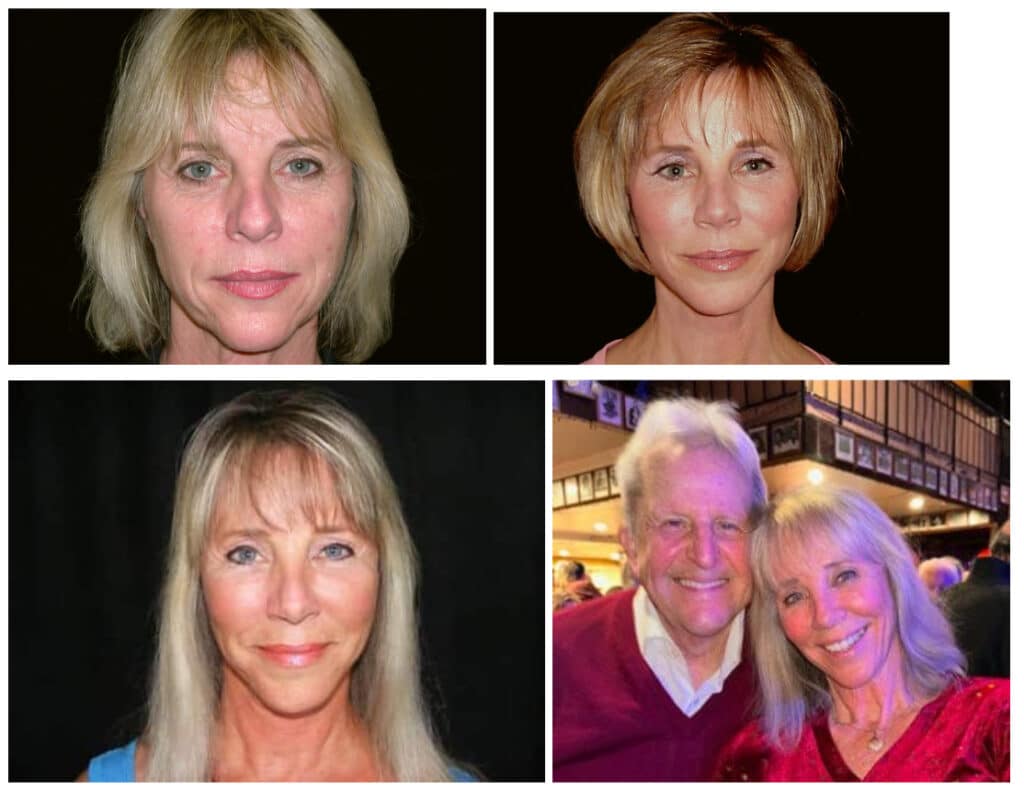
Based on the case presentation for Janice, her long-term result demonstrates the remarkable durability of a deep plane facelift when evaluated 18 years post-operatively.
Pre-Operative Assessment and Concerns
Before her procedure, Janice presented with classic signs of facial aging primarily driven by gravity and tissue laxity:
- Lower Face and Jawline: Significant sagging along the jawline, presenting as prominent jowls that obscured her natural mandibular definition.
- Midface: Descended malar fat pads, which contributed to a hollowed appearance under the eyes and deepened nasolabial folds.
- Neck: Mild to moderate skin laxity and banding in the submental (under-chin) region.
What is Dr. Delgado’s Surgical Approach: Deep Plane Facelift?
Unlike a traditional SMAS facelift, which merely pulls and tightens the surface skin and superficial muscle layer, Janet underwent a deep-plane facelift.
- The Technique: Dr. Delgado repositioned the deep structural layers of the face by releasing the retaining ligaments. This allowed the entire composite layer of muscle and fat pads to be lifted vertically as a single unit. Dr. Delgado secured the deep plane composite flap with permanent sutures.
- The Advantage: By shifting the tension away from the skin and onto the deep, secure foundational tissues, this technique avoids the tightly pulled, “windswept” look often associated with older facelift methods. It restores youthful volume to the midface and naturally re-establishes a clean jawline. Dr. Delgado employs a customized dissection technique that is both safe and thorough.
18-Year Post-Operative Outcome
Evaluating a facelift 18 years later provides definitive evidence of deep-tissue lifting’s longevity. Janet’s 18-year post-operative photos showcase several key outcomes:
- Exceptional Structural Longevity: While normal chronological aging and a natural loss of facial volume continue over 18 years, the structural foundation re-established by the deep plane lift remains intact. Her jawline remains significantly more defined, and the heavy jowling she experienced before surgery has not recurred to its original extent.
- Natural Softness: Her facial expressions remain completely natural. Because the skin was never tightly stretched under tension, there is no distortion around the mouth or flattening of the midface.
- Graceful Aging: Janice still looks remarkably refreshed for her age. The procedure essentially “reset the clock,” allowing her to age gracefully from a much more youthful baseline over the subsequent two and a half decades.
This case stands as a classic textbook example of why the deep plane technique is considered the gold standard for patients seeking natural-looking, highly durable facial rejuvenation.
Expert Consultation and Realistic Expectations

Consultation between a patient and Dr. Delgado.
Consulting qualified plastic surgeons, such as those offering personalized plastic surgery in San Francisco and Marin County, is crucial for safe and effective plastic surgery facial improvements. This ensures patients receive personalized advice and treatment plans tailored to their needs, goals, relevant medication history, and whether lifestyle changes should be part of the overall plan.
Discussing facial symmetry with a plastic surgeon can help set realistic expectations and achieve a more balanced and attractive appearance.
Non-surgical methods can enhance facial expressions and boost self-esteem, while surgical options offer more permanent solutions.
Consulting with Dr. Delgado, a Qualified Plastic Surgeon

Dr. Delgado was featured in San Francisco Magazine as the best plastic surgeon in San Francisco, “Best of the Bay.” During consultation, patients should disclose their current medications, including semaglutide by its generic name, if relevant.
Choosing a skilled plastic surgeon, such as Dr. Miguel Delgado, who has been named San Francisco’s top plastic surgeon, is essential to achieving the desired outcomes. Discussing facial symmetry with a plastic surgeon can help set realistic expectations and achieve a more balanced and attractive appearance. Dr. Delgado’s expertise and positive patient reviews highlight the importance of selecting a surgeon with a proven track record.
Many patients report high satisfaction with their results, often praising Dr. Delgado’s expertise and support throughout their treatment journey, as reflected in his extensive before-and-after plastic surgery photo gallery.
Setting Realistic Expectations
Maintaining realistic expectations is important, since cosmetic surgery can enhance a person’s appearance, but not entirely transform their facial structure. Patients should recognize that while surgical interventions can improve facial features, significant changes to one’s facial structure may not be achievable, and if facial changes are related to weight loss or medication use, outcomes and expectations should be discussed carefully with the surgeon.
Discussing facial symmetry with a plastic surgeon can help set realistic expectations and achieve a more balanced and attractive appearance.
Dr. Delgado’s Deep Plane Facelift Reviews
Linda A.
“If I could rate Dr. Delgado and his staff, I would give him a million. I was looking for a lower face and neck lift and a deep plane lift. I checked out many plastic surgeons. I went to Dr. Delgado around 15 years ago for broken blood vessels around my nose. They never came back. I figured, why not return to him? He is the BEST. He is a true artist; he’s caring, and he listens to what you say. I feel like he is family. I’m so happy with my surgery. I couldn’t ask for more.”
tarstarstarstarstar
“I could not be happier with the care and attention I received from Dr. Delgado and his entire staff. From the first consultation through to my last visit this week, they were all very attentive, helpful, supportive, encouraging, and caring.”
Wendy B.
“Dr. Delgado made me feel so comfortable right from the start. I wanted a lower face and neck lift, and he recommended an advanced deep plane facelift technique. He explained the procedure and recovery so well. There was no air about him, just genuine, caring, and helpful. I felt comfortable with him immediately.”
Janie B.
“I am extremely happy with the results. I feel and look so much younger, yet so natural – his results are exactly what I wanted. My only regret is that I wish I had done it sooner.”
“Choosing a plastic surgeon is one of the biggest decisions you’ll ever make, and I can honestly say choosing Dr. Delgado was one of the best decisions I’ve ever made.
From the moment I met him, I felt a sense of confidence and trust that is hard to describe. During my consultation, he didn’t rush through the appointment or simply tell me what procedures I “needed.” Instead, he quietly studied my face with incredible focus and intention. He listened carefully to what I wanted, understood that my goal was to look refreshed—not different—and his recommendations reflected exactly that. I walked out of his office that day knowing, without hesitation, that he was the surgeon I wanted and trusted.
The care I received leading up to surgery only reinforced that feeling. My pre-operative appointment was thorough, thoughtful, and informative. Every question I had was answered with patience, and I never once felt rushed. His entire office staff is exceptional. They are warm, kind, knowledgeable, and genuinely invested in making you feel comfortable every step of the way.
On the morning of my surgery, I was naturally nervous, but the OR nurse immediately put me at ease as did Dr. Delgado. Their compassion and reassurance made all the difference, and I knew I was surrounded by people who truly cared.
What has impressed me most, however, is what happened after the surgery. Dr. Delgado’s level of aftercare is something I never expected. He personally checked on me regularly, made himself available, and closely followed my recovery to ensure I was healing well. Every follow-up appointment was unhurried, reassuring, and filled with the same level of care I experienced from day one. I never felt like just another patient—I felt genuinely cared for as a person.
Today, when I look in the mirror, I still see me—just a more rested, refreshed, and confident version of myself. That was exactly what I had hoped for, and Dr. Delgado exceeded every expectation I had. His work is beautiful because it looks so natural.
If you’re considering a deep plane neck and facelift along with other facial plastic surgery and are looking for a surgeon with extraordinary talent, an artistic eye, impeccable attention to detail, and a level of compassion that is increasingly rare, I recommend Dr. Delgado with my whole heart. I am endlessly grateful to him and his incredible team for giving me not only beautiful results, but an experience that made me feel safe, supported, and cared for from beginning to end.”
What are Dr. Delgado’s Locations besides the San Francisco Bay Area?
Dr. Delgado’s patients frequently commend him for his attentive care and transformative results, especially after deep plane facelift and neck lift surgery in Santa Rosa, a key offering of his practice. They appreciate his professionalism and the quality of care his staff provides, often highlighting the positive changes they experience.
Office Locations and Surgery Center

Dr. Miguel Delgado is a highly experienced plastic surgeon whose primary office is located in San Francisco. He also serves patients at the Marin Cosmetic Surgery Center in Novato. Patients can discuss facial symmetry and other concerns with Dr. Delgado at his San Francisco and Marin County locations. These locations ensure that patients from the San Francisco Bay Area can easily access his expertise, supported by a highly skilled plastic surgery care team.
Frequently Asked Questions
What is RBF (“resting bitch face”)?
“Resting bitch face,” or RBF, can create the impression that someone is annoyed or angry even when they are not, especially when they are relaxed. The term gained popularity around 2013, largely due to media coverage, viral content, and broader public discussion of facial expressions. Improving facial symmetry can be achieved through various treatments, enhancing appearance and self-esteem.
Can both men and women have RBF?
Indeed, both men and women can experience RBF, contradicting the common belief that it primarily affects women. Gender does not limit this phenomenon. Facial symmetry can also influence how RBF is perceived, with more symmetrical faces often seen as less harsh.
What are some non-surgical options to improve resting facial expressions?
Non-surgical options to improve resting facial expressions include:
- BOTOX® Cosmetic injections
- Dermal fillers
- Facial exercises
- Facial contouring
These treatments not only enhance appearance, but also increase self-esteem.
How does aging affect resting facial expressions?
Aging significantly impacts resting facial expressions by diminishing skin elasticity and muscle tone, resulting in droopy eyelids and deeper lines. Consequently, these changes can create a more fatigued or somber appearance. Facial contouring can help address signs of aging, providing a more youthful, refreshed appearance.
What should I consider when choosing a plastic surgeon?
When selecting a plastic surgeon, prioritize their qualifications, experience, and patient reviews to ensure safe and successful results. Patients should also ask how current medication use, recent weight loss, or similar factors may affect candidacy and results. A proven track record is essential for a positive surgical experience.
Discussing facial symmetry with a plastic surgeon can help set realistic expectations and achieve a more balanced and attractive appearance.
What does a deep plane facelift improve?
A deep plane facelift can lift the jowl region and neckline, reshaping the jawline and enhancing facial appearance. A facelift and neck lift can also improve facial symmetry, making the face appear more balanced and attractive, similar to the comprehensive facelift and neck lift options available in Napa Valley. This procedure can significantly reduce signs of aging, such as sagging skin and jowls, creating a more youthful, refreshed look.
References
- American Society of Plastic Surgery, What is a Facelift (Rhytidectomy) – https://www.plasticsurgery.org/cosmetic-procedures/facelift
- Cleveland Clinic, Facelift (Rhytidectomy) – https://my.clevelandclinic.org/health/treatments/11023-facelift.
- Comparative Effectiveness of Deep Plane and Extended Deep Plane Facelifts in Lower Facial Rejuvenation PurchasedSaeed Golparvaran, MD, Pouria Ziaee, MD, Ali Aalizade, MD, Amir A. Sazgar, MD
- Aging Face Rejuvenation: Guiding Anatomic and Scientific ConceptsRod J Rohrich and others*, Aesthetic Surgery Journal*, Volume 46, Issue 4, April 2026, Pages 348–356, https://doi.org/10.1093/asj/sjaf169Author NotesAesthetic Surgery Journal, Volume 46, Issue 4, April 2026, Pages 407–41
About the Author

Medically written and verified by Dr. Miguel Delgado, MD, Board-Certified Plastic Surgeon
Dr. Miguel Delgado is a board-certified plastic surgeon in San Francisco specializing in facial rejuvenation, deep plane facelifts, body contouring, and advanced gynecomastia correction — a procedure that reduces male breast size, which can be influenced by certain medications, anabolic steroids, or other drugs. Certified by the American Board of Plastic Surgery, he brings decades of specialized surgical expertise and artistic precision to his practice. Through his blog and patient education resources, Dr. Delgado shares expert insights and guidance to help patients make confident, informed decisions about their aesthetic journey.