
10 Min Read
- Key Takeaways
- Does Gynecomastia Surgery Leave Visible Scars?
- How Gynecomastia Surgery Creates Scars
- Incision Types and Typical Gynecomastia Scar Patterns
- What Gynecomastia Scars Usually Look Like Over Time?
- Factors That Influence How Noticeable Gynecomastia Scars Become
- How to Minimize Scarring After Gynecomastia Surgery
- Treatments to Improve the Appearance of Existing Gynecomastia Scars
- Gynecomastia Scars vs. Results: What Patients Can Expect with Dr. Delgado
- Why Choose Dr. Miguel Delgado for Male Breast Reduction in San Francisco & Marin
- FAQ: Gynecomastia Surgery Scars
And How We Minimize Them

If you are considering gynecomastia surgery, it is natural to ask about gynecomastia surgery scars before anything else. The short answer: yes, incisions create scars, but with the right incision type, technique, and scar care, most scars become discreet.
This guide is for men considering gynecomastia surgery, or anyone concerned about the appearance of scars after male breast reduction. We cover the types of scars, how they heal, factors that influence their visibility, and ways to minimize them, to help you make an informed decision and set realistic expectations for your results. Understanding what to expect from scarring is crucial in surgical decision-making, as it helps you weigh the benefits of a flatter, more masculine chest against the potential for visible marks, and empowers you to take steps that support the best possible healing.
Key Takeaways
- Gynecomastia surgery and male breast reduction surgery always create scars, but modern techniques aim for minimal scarring.
- The periareolar incision usually heals as a small, naturally camouflaged line around the areola.
- Free-nipple double-incision mastectomy creates more visible scars, but they can fade well over 12–18 months.
- Scar visibility depends on genetics, skin type, darker skin, incision design, and aftercare.
- Dr. Miguel Delgado uses meticulous closure, silicone sheets, gel, and laser therapy to minimize visible scarring.
Does Gynecomastia Surgery Leave Visible Scars?
Yes, gynecomastia surgery leaves scars. All gynecomastia surgery leaves scars because any incision in healing skin forms scar tissue. The goal is to keep them as discreet as possible. That said, gynecomastia surgery scars are permanent, but they typically fade over time and can become less noticeable, often blending into the surrounding skin or the chest’s natural contours.
Male breast reduction removes excess breast tissue, glandular tissue, fat, and, in some cases, skin. Dr. Delgado’s goal is a masculine chest with minimal scarring by choosing incisions based on anatomy, enlarged breasts, skin tone, and desired contour.
Mild cases often require a short periareolar incision and small liposuction incisions. Severe gynecomastia may require skin removal, an inframammary incision along the chest crease, or a free-nipple double-incision approach.
How Gynecomastia Surgery Creates Scars
Scars form due to surgical incisions that must heal, and the body produces collagen after surgical treatment. Scar formation is a normal part of the healing process, not a complication, though some patients later wonder whether a firm area represents scar tissue or leftover glandular tissue.
The choice of surgical technique in gynecomastia surgery directly affects the resulting scars, and working with a world-renowned gynecomastia specialist helps ensure that techniques like subcutaneous mastectomy are used only when necessary, since they require larger incisions compared to liposuction-only methods.
Modern plastic surgery uses fine sutures, layered closure, careful preservation of blood flow, and low tension to create thin surgical scars rather than wide or irregular ones.
Incision Types and Typical Gynecomastia Scar Patterns
Common incision types for gynecomastia surgery include periareolar and inframammary incisions, which are designed to be discreet and camouflaged within natural skin folds. Consulting a board-certified plastic surgeon can provide specific insights into incision placement based on individual chest anatomy, the underlying diagnosis of gynecomastia, and its treatment options.
Periareolar Incision: Minimal Scarring Around the Nipple
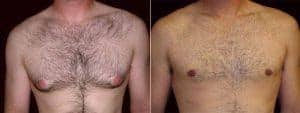
The most common incision type for gynecomastia surgery is the periareolar incision, a semicircular cut along the border of the areola, designed to minimize visible scarring by hiding the incision in the skin’s color change.
This cut is made around the areola, usually along the lower edge, so the scar’s appearance is naturally camouflaged. Periareolar surgery allows direct removal of glandular tissue and breast tissue while protecting surrounding tissue and, when possible, nipple sensation.
These scars are often 1.5 to 3 cm and become fine lines. For most patients, the result is barely noticeable after proper healing.
Liposuction-Only Incisions: Tiny “Dot” Scars
Liposuction techniques for gynecomastia surgery involve small incisions of about 3-5 mm, typically placed near the chest edge or armpit, resulting in scars that often become barely noticeable over time.
This option works best when the problem is mostly excess fat, not firm glandular tissue or loose skin. The trade-off is simple: tiny incisions, but limited correction if dense tissue is present. This is why exercise and fat loss alone often help only with pseudogynecomastia, not with true gynecomastia caused by hormonal and other factors that require surgery.
Free-Nipple Double-Incision Mastectomy Scars
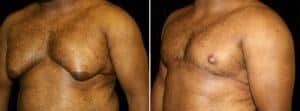
For severe gynecomastia or major excess skin, or in some transgender men seeking gender-affirming chest contouring, free-nipple double-incision mastectomy and related FTM top surgery techniques may be the best option. It uses longer horizontal incisions across the chest, often aligned with the pectoral border, plus circular nipple graft scars.
For patients with severe gynecomastia or excess skin, an inframammary incision, located in the natural crease under the breast, may be used to help conceal the scar. Double-incision scars are more visible early on, but they allow better flattening and tighter contour than a periareolar incision alone.
With precise closure, these scars fade into thinner, paler lines that follow natural contours.
What Gynecomastia Scars Usually Look Like Over Time?
The appearance of gynecomastia surgery scars can change significantly over the first year, starting as red and raised, then softening and lightening to a pale color.
Typical Healing Timeline From Day 1 to One Year
- Days 1–14: Healing incisions look pink or red, with swelling, bruising, and postoperative discomfort near the surgical site.
- Weeks 3–8: Scars may itch, feel firm, and remain pink as collagen builds.
- Months 3–6: Most scars flatten, soften, and lighten. Periareolar scars begin to blend into the areolar border.
- Months 6–12: The healing process of scars typically progresses over this period, with initial redness and firmness giving way to a flatter, lighter appearance. Final scar appearance may continue to improve for up to 18 months.
Normal vs. Problem Scarring
Thin, flat scars that slowly fade are normal. Hypertrophic scars are raised, but stay within the incision line. Keloids grow beyond the incision and are more likely in patients with darker or thicker skin.
Abnormal scarring, itching, thickening, or a noticeable scar should be evaluated early, so silicone, steroid injections, pressure, or laser can be started.
Factors That Influence How Noticeable Gynecomastia Scars Become
Scar visibility after gynecomastia surgery is influenced by factors such as genetics, skin type, and adherence to post-surgical care instructions. Genetics and skin tone play significant roles in scar formation and healing outcomes after gynecomastia surgery. Certain medications, such as isotretinoin (Accutane), can also raise questions about scar healing.
Skin Type, Age, and Darker Skin Tones
Patients with darker or thicker skin, or a history of keloid or hypertrophic scarring, are more likely to experience prominent scars after surgery. Darker skin can also develop brown or purple pigmentation, especially after sun exposure.
Surgical Technique and Incision Design
A skilled plastic surgeon places incisions along the areola edge, armpit, inframammary fold, or chest crease to minimize scarring. Careful tissue handling, low tension, and layered sutures support optimal healing and better scar healing.
Lifestyle, Medical Conditions, and Aftercare
Lifestyle factors such as smoking, poor nutrition, and early physical strain can negatively impact scar healing, making it wider or redder. Nicotine reduces blood flow, while a poor diet limits collagen repair.
Following post-operative care instructions, such as wearing compression garments and protecting scars from sun exposure, is critical for scar healing.
How to Minimize Scarring After Gynecomastia Surgery
You cannot completely erase scars, but you can minimize them with consistent care.
Early Aftercare: The First 2 to 4 Weeks
Keep incisions clean and dry. Wear compression garments as directed to reduce swelling and protect the surgical site. Avoid heavy lifting, stretching, and physical strain. Do not apply scar creams, oils, or silicone until Dr. Delgado clears you.
Ongoing Scar Care: Months 1 to 12
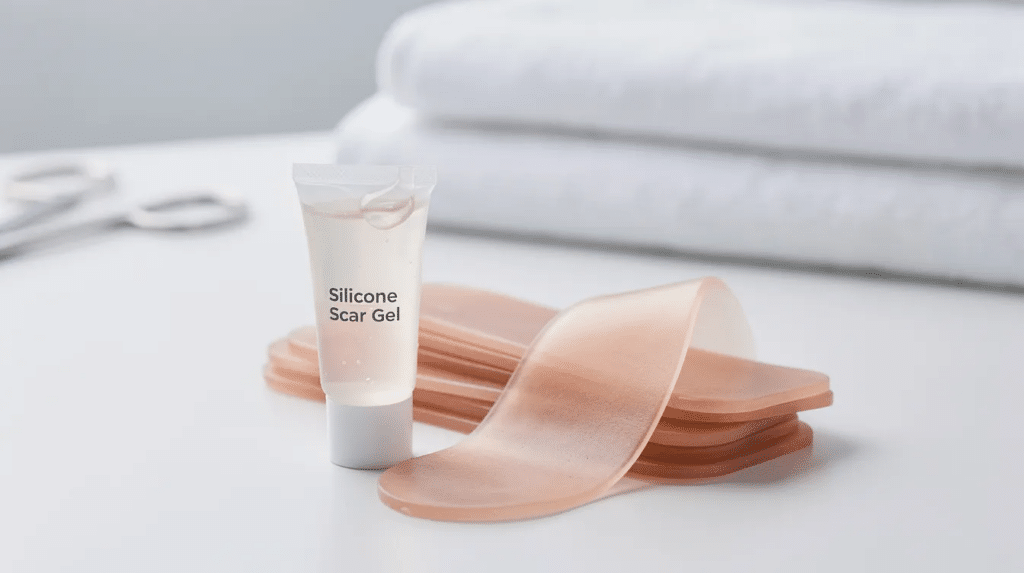
Once the skin is sealed, silicone sheets or silicone gel can help flatten scars, reduce redness, and improve flexibility. Gentle pressure and massage may soften firm scar tissue after approval.
Avoid sun exposure on healing scars. Use SPF 30+ or clothing to protect against sun exposure, which can permanently darken gynecomastia scars, especially in dark skin tones. Remember that emotional adjustment and acceptance of gynecomastia and its impact are also part of recovery.
Lifestyle Habits for Better Scar Healing
Eat enough protein, fruits, vegetables, vitamin C, and zinc. Avoid nicotine and recreational drugs. Sleep well, hydrate, and gradually return to exercise. These habits support optimal healing and proper healing.
Treatments to Improve the Appearance of Existing Gynecomastia Scars
Even if surgery leaves thicker, darker, or raised scars, treatment can improve the post-operative appearance. Some men also explore additional body contouring plastic surgery procedures, or focus on comfort with support bras and their personal experiences wearing them.
Silicone Sheeting, Gels, and At-Home Options
Silicone is a first-line option for flattening and softening most scars. Some scar creams may help with hydration, but evidence is mixed; use products only under a surgeon’s guidance.
Laser, Microneedling, and Other In-Office Scar Treatments
Laser therapy can reduce redness and pigmentation. Fractional laser or microneedling may smooth the texture. Steroid injections can reduce hypertrophic scars or early keloids. Combination care often works best.
When Is Surgical Scar Revision Considered?
It is recommended to wait 12 months or more before undergoing scar revision surgery, once the scars have matured.
Gynecomastia Scars vs. Results: What Patients Can Expect with Dr. Delgado
For most patients, a flatter chest is more noticeable than the scars within six to 12 months. Dr. Delgado balances contour and scar quality, using periareolar incision, liposuction, inframammary approaches, or a free-nipple double incision as needed to achieve optimal results. This has led many to view him as the best gynecomastia surgeon in California.
A review of scar-minimizing gynecomastia techniques reported high satisfaction with scars in many patients, indicating that both scar quality and contour matter.
Why Choose Dr. Miguel Delgado for Male Breast Reduction in San Francisco & Marin

Dr. Miguel Delgado is a board-certified plastic surgeon with decades of experience in gynecomastia surgery, male breast reduction, and revision cases. His San Francisco and Marin County practice and philosophy focus on natural shape, safe surgery, realistic expectations, and personalized scar care.
Schedule a free virtual or in-office consultation by calling (415) 595-4161 or filling out our online contact form. Explore his broader plastic surgery practice in Santa Rosa and the Bay Area to discuss your anatomy, incision options, and scar-reduction plan.
FAQ: Gynecomastia Surgery Scars
Can I get a chest tattoo to hide my gynecomastia scars?
Usually, only after scars are mature, often 12–18 months. Tattooing too early can injure healing skin and worsen abnormal scarring.
Will weight gain or loss change how my gynecomastia scars look?
Moderate changes usually do little. Major weight shifts can stretch scars or create loose skin, so stable weight helps preserve results.
When can I safely return to direct sunlight or swimming after surgery?
It is recommended to wait to swim until incisions are fully closed and cleared, often three to four weeks. Direct sun should be avoided for six to 12 months.
Are revision gynecomastia scars worse than first-time surgery scars?
Revision works through existing scar tissue, which makes it more complex. With careful planning, revised scars can be thinner and better positioned.
Can I prevent raised scars if I have darker skin?
You cannot change genetics, but early silicone, sun protection, close follow-up, laser therapy, and steroid injections when needed can reduce risk.